
Biophilic Design, Sound and Mental Wellbeing in Commercial Spaces
Spaces designed for both sight and sound, where biophilic details and acoustic comfort work together to support wellbeing.
In the workplace, hospitality, schools, healthcare, and commercial design, the conversation around wellbeing is ever-evolving and has recently moved beyond visual aesthetics alone. Research into biophilic design shows that nature-connected environments can support psychological wellbeing, emotional restoration, and improved performance, making the case for a more holistic approach to how spaces are designed.
Biophilia is about reconnecting people with natural systems. Its hypothesis proposes that people have an innate tendency to seek connection with nature and other living systems, and a large body of evidence supports the idea that this connection can positively affect mood and wellbeing. After all, Biophilia does mean ‘LIFE’ in the original Greek! Biophilia is all about bringing LIFE toward people, to enrich them and their lives.

Biophilia is LIFE!
Traditionally, biophilic design has often been interpreted through visual cues such as planting, daylight, timber, and organic form. However, our experience of nature is multisensory, and sound plays a central role in how restorative an environment feels; the rustle of leaves, birdsong, rainfall, and moving water all contribute to the calming effect we associate with natural settings. One research example by the University of Exeter with BBC collaborators found that hearing wildlife sounds, and birdsong in particular, can enhance recovery from stress and mental fatigue, and these states are very real.
When natural references are introduced visually, but the sound environment remains harsh, reverberant, or intrusive, the space can feel unresolved. Sound has a direct relationship with stress, concentration, and overall mental wellbeing. Noise exposure and noise annoyance are increasingly associated with anxiety, depression, cognitive impairment, and poorer subjective mental wellbeing. Poor acoustic environments can increase fatigue, reduce concentration, and make it harder for people to feel comfortable or in control of their surroundings. Reviews of the evidence on noise and mental health suggest that chronic or poorly managed noise increases susceptibility to mental health challenges and can negatively affect day-to-day cognitive performance.
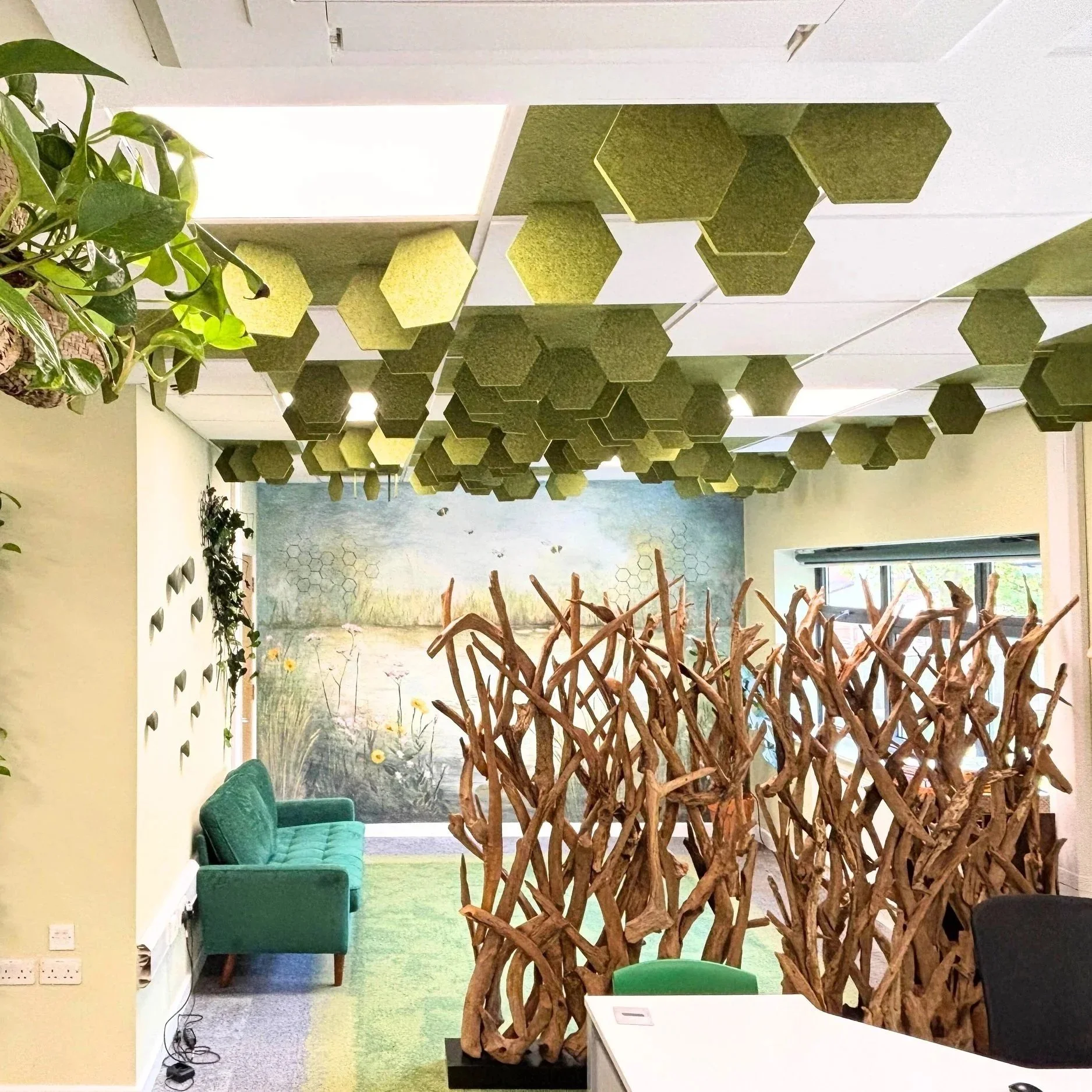
Credit: Biophilic Designer Lisa Norton
This is where the relationship between biophilic design and acoustic design becomes especially valuable. Natural environments do not tend to feel acoustically flat or chaotic; instead, they offer layered, balanced soundscapes that support calm, orientation, and a sense of ease – these hit both points for a better, calmer, more productive and engaging environment.
In interior architecture, this means moving beyond the idea of simply reducing noise. The aim is to shape sound intentionally, creating environments that are not only quieter, but more comfortable, intuitive, and emotionally supportive.
As designers, we can choose to enhance spaces both acoustically and materially. Many materials associated with biophilic interiors- textured surfaces, soft finishes, natural fibres, and absorptive elements - also help manage reverberation and soften the acoustic character of a space, supporting both sensory comfort and design cohesion.
Spatial planning matters too- zoning spaces for different acoustic needs, from quiet focus areas to collaborative settings and softer transition zones, reflects the diversity found in natural environments and allows users to choose settings that better suit their cognitive and emotional needs.
Furthermore, there is also growing interest in the role of positive soundscapes. Studies on nature sound exposure suggest that natural sounds can support mood recovery, stress reduction, and mental restoration, which opens opportunities for designers to think more carefully about how ambient sound is curated within interior environments.
For clients and end users, the benefits are tangible. Research on biophilic and nature-connected workplaces suggests links with improved wellbeing, stronger cognitive performance, and better overall user satisfaction, especially where sensory comfort is addressed as part of a joined-up design strategy.
As wellbeing continues to shape the future of workplaces, hospitality, healthcare, and learning environments, sound should be considered a fundamental part of the biophilic conversation. Designing for how a space sounds is just as important as designing for how it looks, because truly restorative environments rely on both visual and acoustic harmony.
At acou.space, we believe that truly restorative environments are designed for both the eye and the ear. Across commercial and public settings such as the workspace, in education, retail, and hospitality settings, we help create spaces where acoustic comfort and biophilic connection work hand in hand, not as separate considerations, but as one integrated design philosophy. Our acoustic solutions do more than control sound; they are crafted to bring the calming, layered qualities of the natural world indoors, softening reverberation while introducing the textures, materials, and sensory cues to inspire and support psychological wellbeing. By shaping how a space sounds as thoughtfully as how it looks, we help our clients create environments that reduce stress, sharpen focus, and support better cognitive performance: spaces that don't just look good, but genuinely feel good to be in. Whether you're reimagining a workplace, a learning environment, a retail experience, or a hospitality space, acou.space is here to help you design for acoustic and biophilic harmony, creating environments to nurture the people who use them.
#Acoustic Creators

Read more about
Biophilic Acoustic Design
-
Zhou, N. et al. (2025). Exploring biophilic building designs to promote wellbeing and productivity.pmc.ncbi.nlm.nih
Joye, Y. & De Block, A. (2022). A Meta-Analysis of Emotional Evidence for the Biophilia Hypothesis. Frontiers in Psychology.frontiersin+1
University of Exeter / BBC collaboration (2022). Sounds of nature benefit mental health and wellbeing / Research finds nature sounds benefit mental health.news-archive.exeter+1
Stansfeld, S. et al. (2021). Association between noise annoyance and mental health outcomes: a systematic review.researchportal.ukhsa
WHO Europe (2024). Environmental noise and health impacts.who
Hahad, O. et al. (2024). Noise and mental health: evidence, mechanisms, and consequences.nature
Ecophon. Biophilic acoustic design: nature-inspired sound environments.ecophon
KPAcoustics. Bringing the benefits of the outdoors in: biophilic design in residential developments.kpacoustics
Psychology in Action. Effects of Nature and Birdsong on Cognition, Attention, and Wellbeing.